
Sourdough, Drones, and Goldfish: Takeaways from Our Summer Outings
Julie Gonzalez | LegacyWorks Group
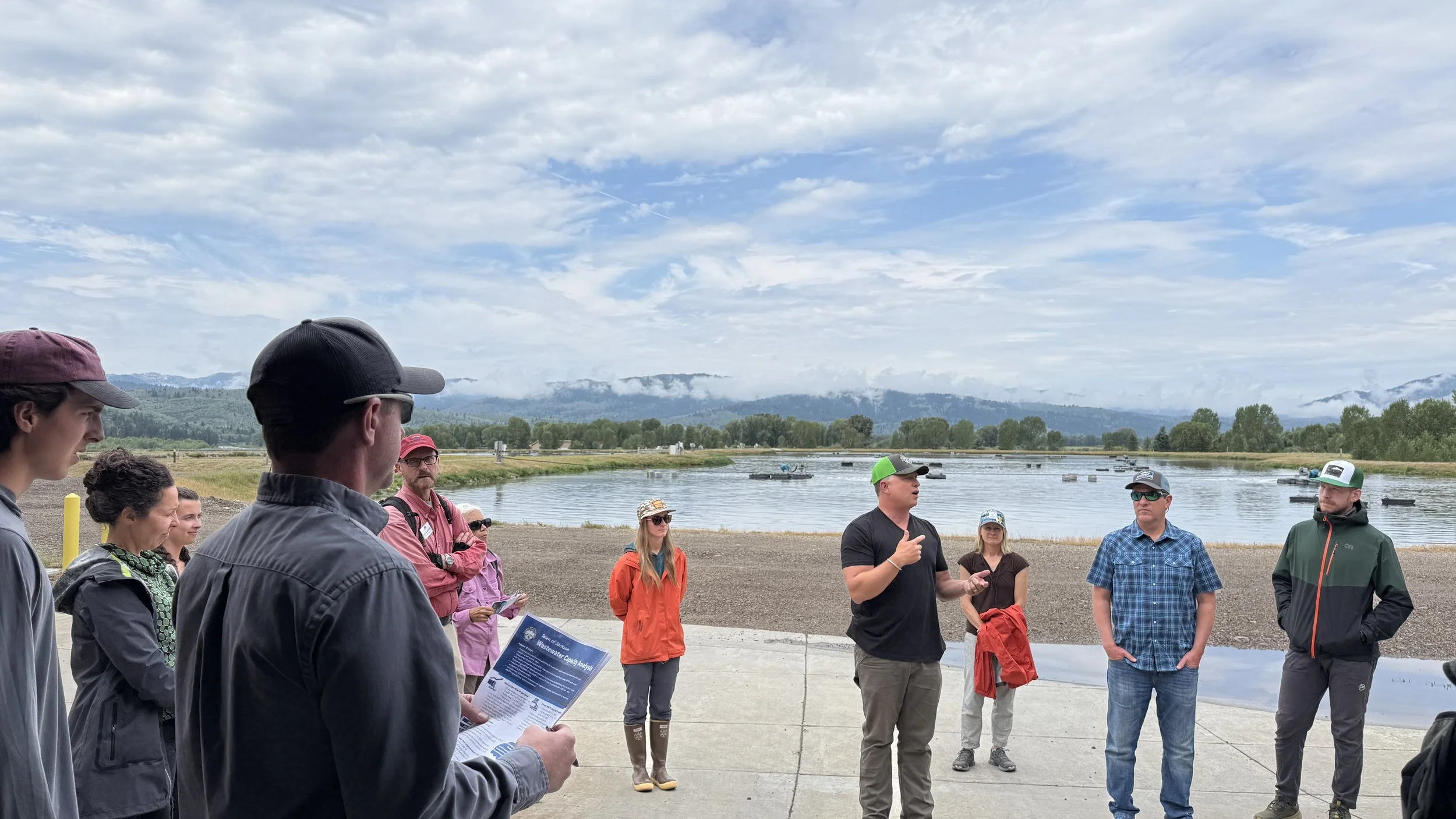
Members gather around Johnny Ziem, Interim Public Works Director, as he explains the 10-lagoon filtration system the Town’s wastewater navigates. Photo: J. Gonzalez/LWG
Through the Snake River Headwaters Watershed Group, we’ve witnessed that truly resilient watershed stewardship starts with shared understanding. This summer, our members got out into the field to experience both ends of our water system: from the urban infrastructure processing municipal wastewater in Jackson, WY to the downstream agricultural operations putting Snake River water to work.
Here is a recap of what we learned, what surprised us, and how seeing water management up close shapes our collective vision for the watershed.
Part 1: Behind the Scenes at the Jackson Wastewater Treatment Plant
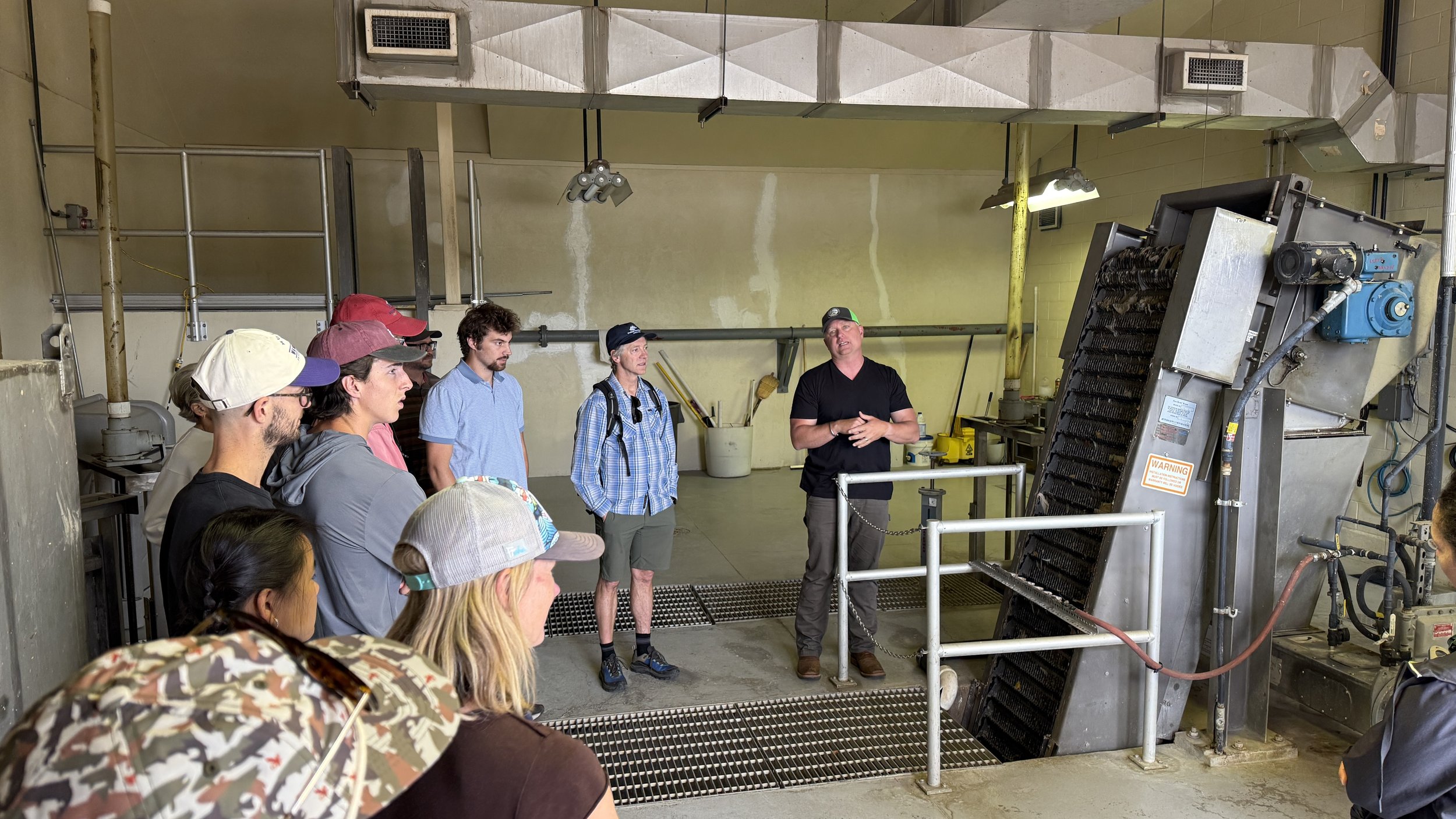
Members witness wastewater entering the plant pass through the sorter, catching large items like phones and “flushable wipes”, before entering the lagoon system. Photo: J. Gonzalez/LWG
In July, 20 SRHWG members toured the Town of Jackson’s Wastewater Treatment Plant to explore how municipal wastewater is managed before it returns to our ecosystem.
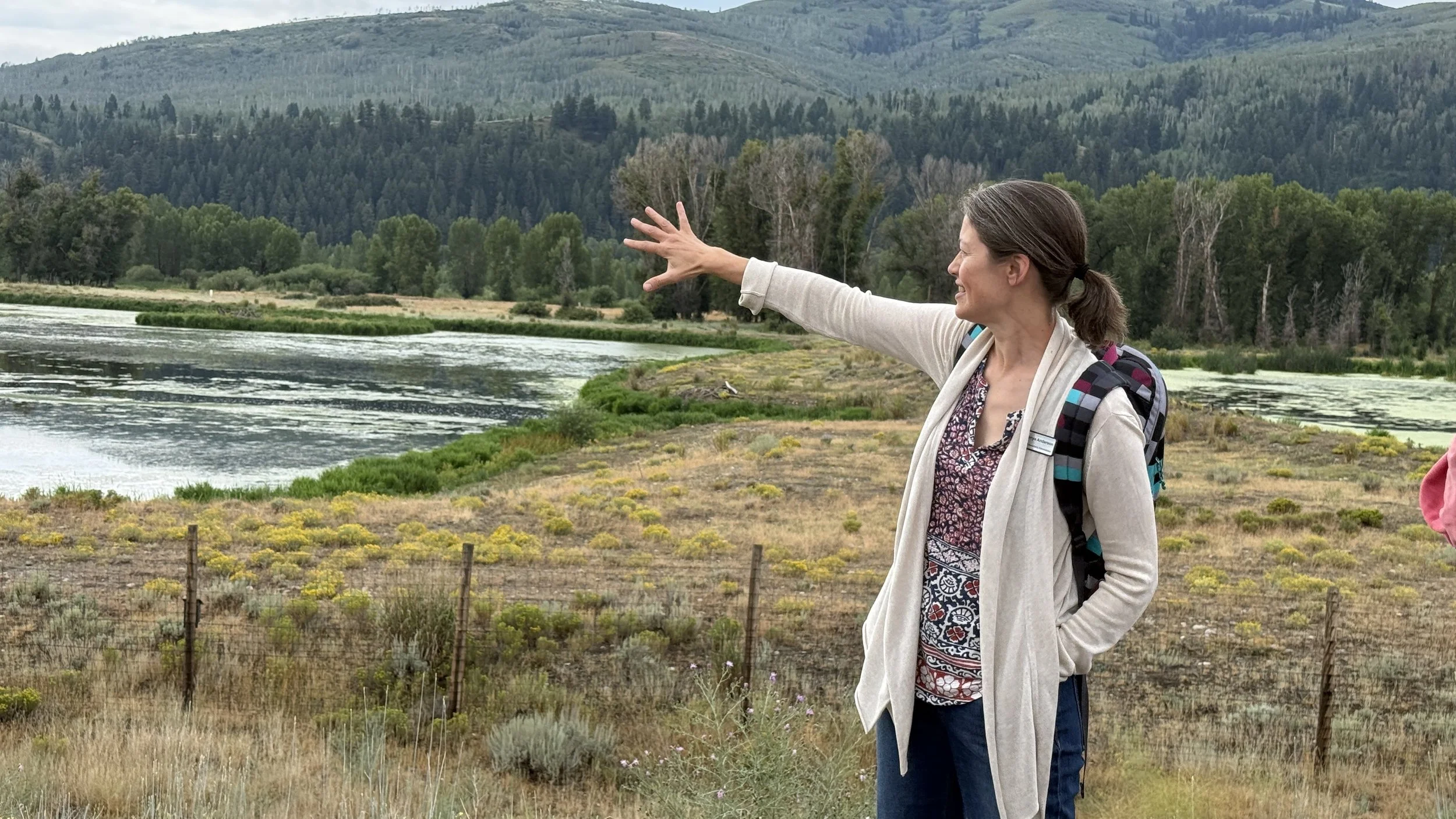
Tanya Anderson, Ecosystems Stewardship Administrator, addresses questions about water quality monitoring in the wetlands prior to the water reentering the Snake. Photo: J. Gonzalez/LWG
Guided by knowledgeable facility staff including Dustin Christensen, Plant Supervisor and Johnny Ziem, Interim Public Works Director, members walked through the multi-stage filtration process that handles up to 5 million gallons of wastewater per day—a peak that hits during late June and early July. The water is then transported through a 10-lagoon system, UV light radiation, and wetlands, before returning to the Snake. A process that can take up to 80 days!
Key Takeaways & Surprises:
The Sourdough Analogy: Members were fascinated to learn that the treatment process relies heavily on living bacteria—with the facility maintaining older "sludge" that operators humorously compared to a long-lived sourdough starter.
An 80-Day Journey: Water spends approximately 80 days moving through the system, which includes enhanced treatment wetlands managed in partnership with Teton Conservation District and Wyoming Game & Fish.
Rigorous Testing: Automated samplers continuously monitor flows for everything from pharmaceuticals and viruses to PFAS (which was not detected in local springs, though trace amounts showed up in stormwater).
Many participants noted how clean and odor-free the facility was, with one attendee sharing: "I was surprised by how large the facility was and impressed by the passion of the team that keeps it running. It was fascinating to see how much filtration it all goes through."
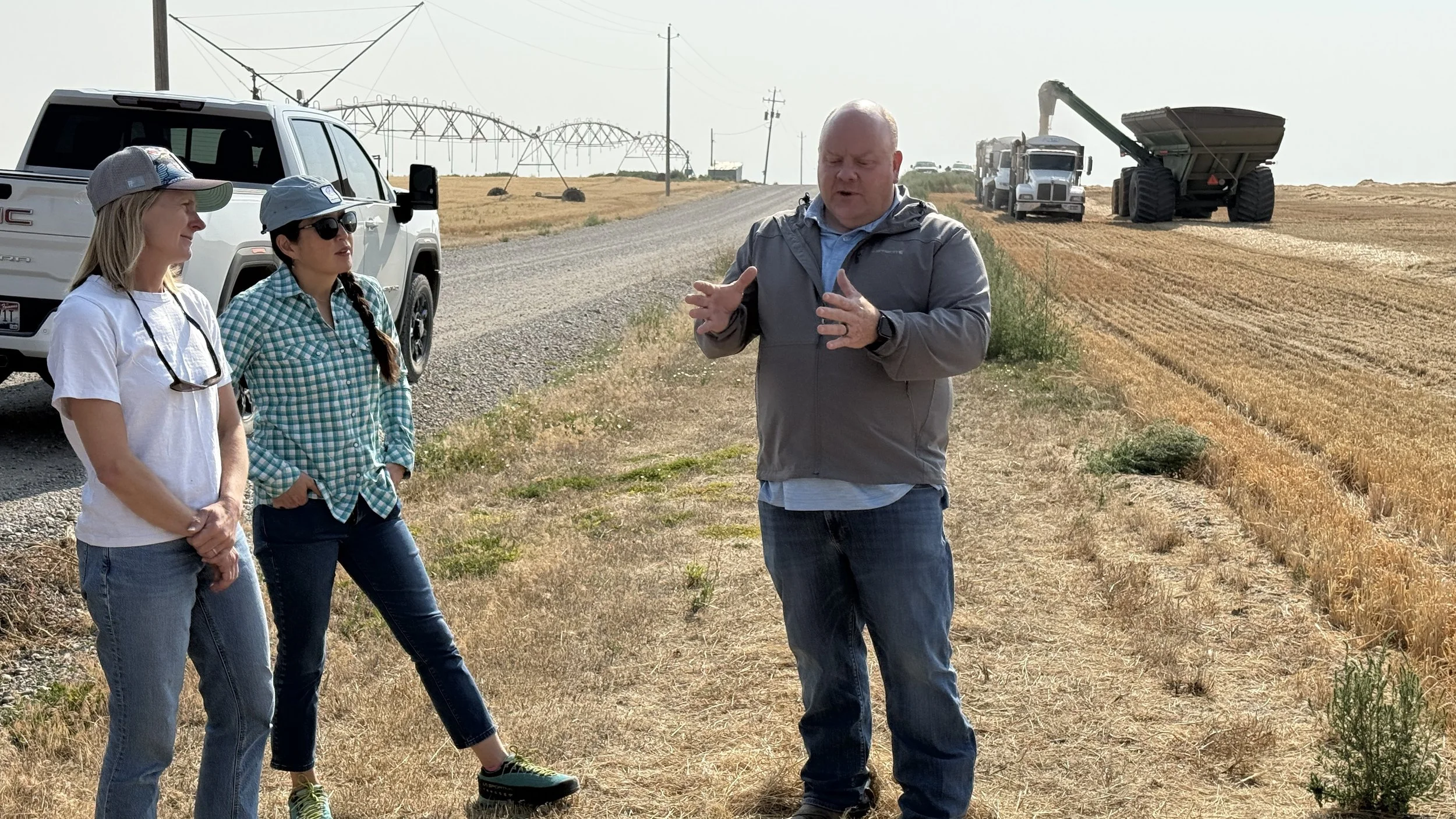
Jeff Van Orden, potato farmer and member of the Committee of Nine welcomes members to his wheat field during harvest. Photo: J. Gonzalez/LWG
Part 2: Downstream Realities – Agriculture, Tech, and Water Rights in Idaho
Later in the summer, 15 members traveled downstream to visit Jeff Van Orden’s farming operations and the Wada Farms processing facility to examine how a dry, low-water year impacts agricultural water users firsthand. Standing at the edge of a 150-acre soft white wheat field, Van Orden, explained how he switched this particular field to use groundwater instead of surface water, requiring new infrastructure to be built on site. Others without groundwater rights or flexibility to use other sources, were not so lucky.
“Spending time with Jeff Van Orden and Mr. Wada was inspiring because you can feel the dedication that they and their family members bring to their work. There is a commitment to stewarding the land and water that is passed down from generation to generation.”
The trip dispelled common misconceptions about agricultural water use, giving members an up-close look at the precision, tech, and hard work required to grow rotated crops like wheat, potatoes, and sugar beets.
Key Takeaways & Surprises:
Measured to the Drop: Contrary to the belief that irrigation is unmonitored, farms in the Aberdeen-Springfield Canal system rely on strict water meters, four-year allotment windows, and precise application metrics (ranging from 16 inches of water per acre for wheat to 32 inches for sugar beets).
High-Tech Stewardship: Attendees watched grain combines coordinate through GPS and learned how spray drones, satellite imaging, and AI-driven sorting pioneered by Wada Farms optimize crop yields while minimizing resource use.
System Operations & Storage: Jeff Van Orden and Aberdeen-Springfield Canal Manger, Matt Stewart highlighted how storage dams function, explaining that Jackson Lake serves as a critical back-up supply that is carefully managed across the broader basin system.
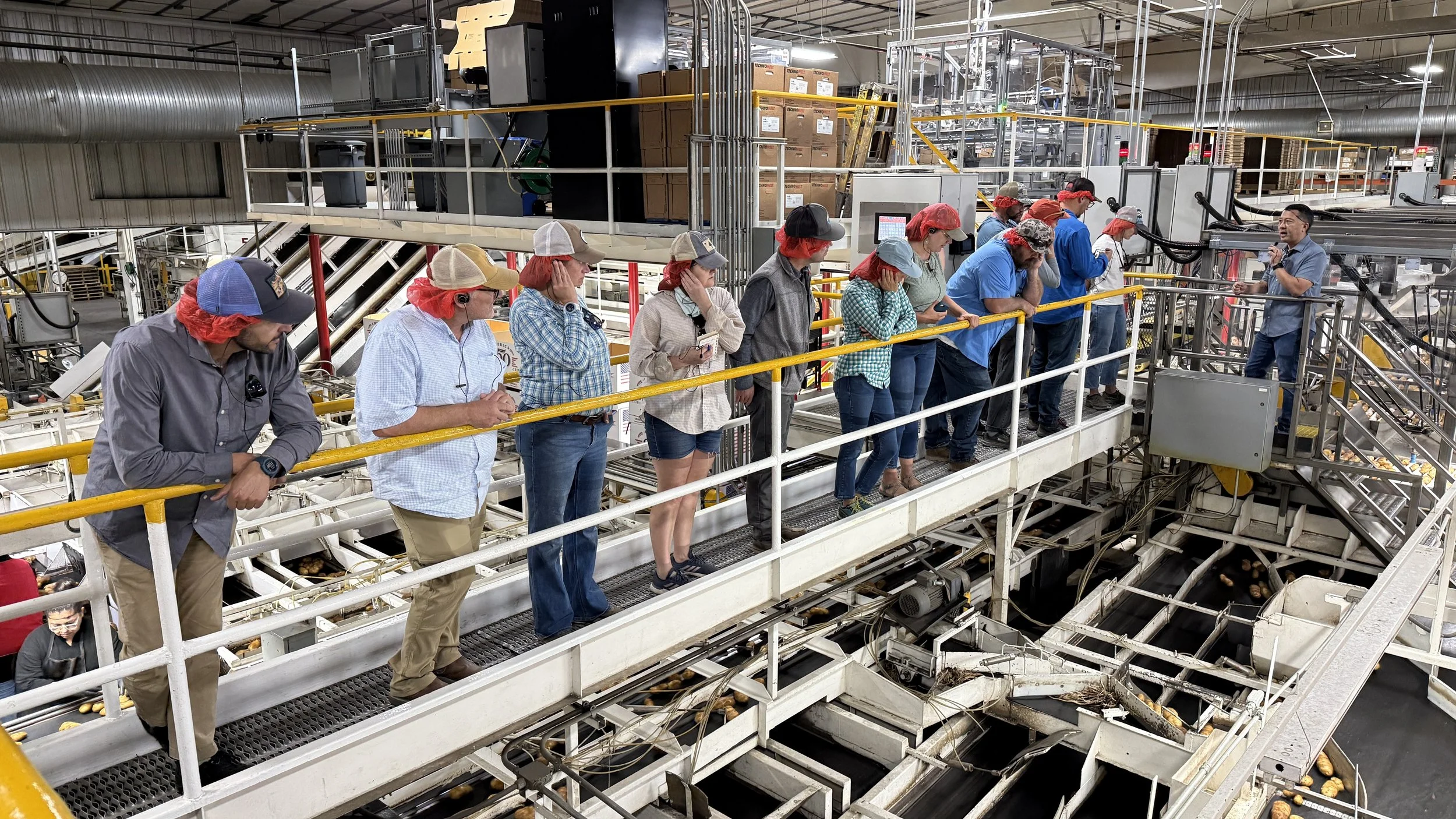
Members listen attentively to Brian Wada, explain potato packaging operations. Photo: J.Gonzalez/LWG
The trip also prompted generative discussions around labor, economics, and policy. As farmer Jeff Van Orden put it bluntly regarding the reality of water in the West: "Without water we are not farming, without the Snake River we can’t continue."
Bridging Perspectives
Beyond the technical operations, the true value of these outings was bringing diverse voices together to build empathy across sectors.
Reflecting on the agriculture tour, Shane Wootan captured the core takeaway of the summer: "We must get better about communicating what water means to each stakeholder. Only by trying to understand how and why water is being managed the way it currently is—and by evolving the system to current precipitation, technology, and social impacts—will we be able to address the future of this system."
What’s Next?
A special thanks to Tanya Anderson with the Town of Jackson for coordinating the wastewater treatment plant tour and Jeff Van Orden for hosting us in Idaho. As well as to everyone who participated, asked thoughtful questions, and made these tours so generative! Based on your feedback, we are exploring future field outings that may include a tour of the Palisades Dam, hands-on field research experiences, or deep dives into other agricultural components.
Have an idea for a future field trip or speaker? Want to host? Email Julie@legacyworksgroup.com or share your thoughts at our next meeting!
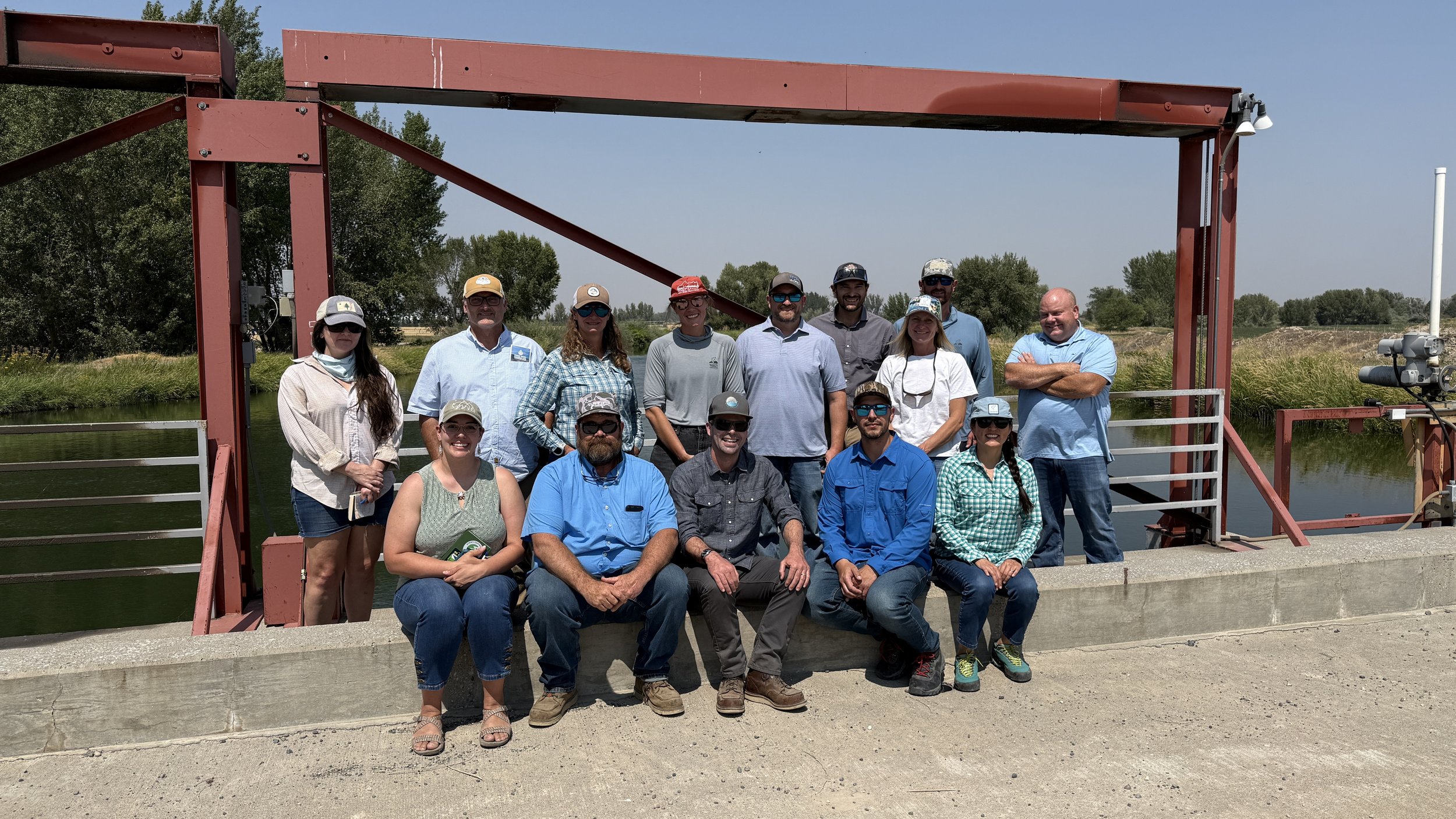
Group photo at the Aberdeen-Springfield Canal. Photo: J. Gonzalez/LWG
