
Protecting the Snake River Headwaters: Wild & Scenic Water Rights Advance
Author: Simeon Caskey, Grand Teton National Park
In a landmark step for river stewardship, federal land managers are seeking to secure water rights for the upper Snake River and its tributary, the Lewis River, under the Craig Thomas Snake Headwaters Legacy Act. This move, years in the making, is designed to permanently protect the natural flows and outstanding values of these iconic rivers—ensuring that the Snake River Headwaters remain a resilient, thriving ecosystem for generations to come.
Why Water Rights Matter
The Snake River Headwaters, designated as part of the National Wild and Scenic Rivers System in 2009, encompass 414 miles of rivers and streams across Grand Teton and Yellowstone National Parks, John D. Rockefeller, Jr. Memorial Parkway, and the National Elk Refuge. This designation was intended to safeguard the rivers’ free-flowing character, water quality, and “outstandingly remarkable values”—from native fisheries and wildlife habitat to cultural and recreational opportunities.
However, as the West faces increasing drought and water demand, legal protection of in-stream flows is essential. The current water rights application, supported by a broad coalition of agencies, conservationists, outfitters, agricultural interests, and community members, aims to “quantify” the flows needed to sustain the ecological, recreational, and cultural values that define the Snake River Headwaters.
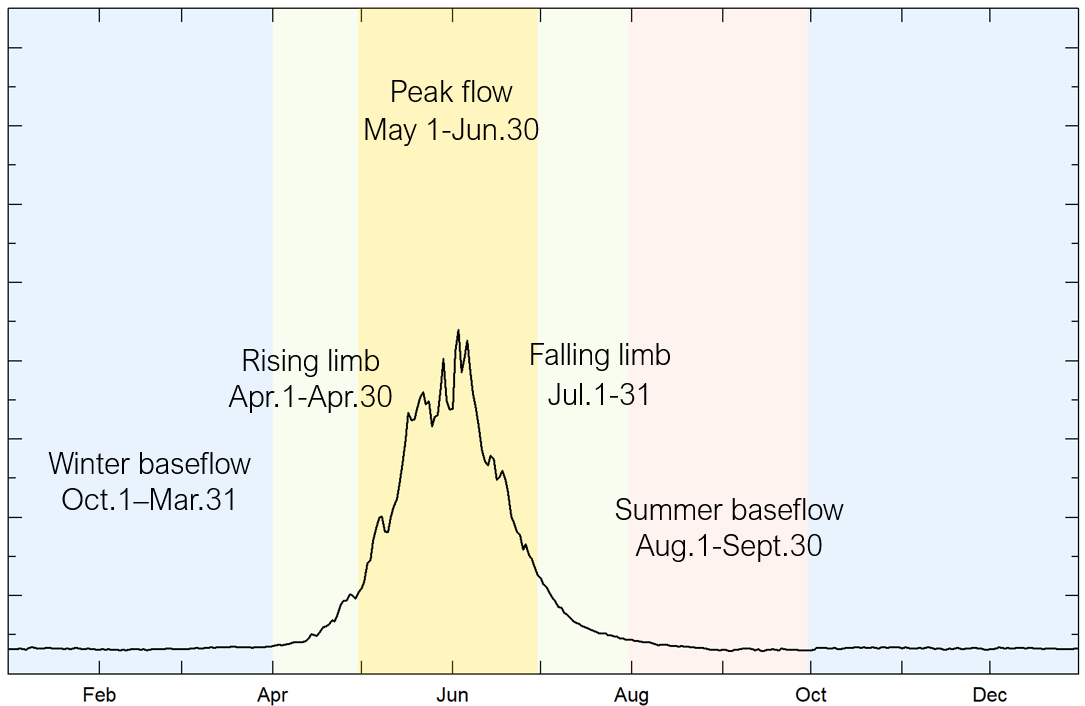
A hydrograph of the Lewis and Snake rivers’ combined seasonal flows, measured from Flagg Ranch. Photo: National Park Service
A Collaborative, Science-Based Approach
The application is rooted in rigorous science and collaboration. Seasonal flow regimes have been carefully defined to support critical river functions—such as fish migration and spawning, riparian vegetation, and natural river processes. By identifying discrete flow periods tied to specific ecological needs, the framework ensures that protections are both durable and adaptable in the face of climate variability and future water demands.
Importantly, the proposed water rights are designed to coexist with existing Wyoming water rights and the 1949 Snake River Compact, respecting the needs of downstream users and irrigators. As Jeff VanOrden, an Idaho farmer and Committee of Nine member, noted, “As water users we recognize the importance of a healthy headwaters ecosystem and commend the efforts of those involved to protect this area that is of immense importance”.
Stewardship for the Future
The Snake River Headwaters Watershed Group (SRHWG) has a vision of clean, abundant water and a healthy, connected ecosystem. This water rights application is a tangible step toward that vision, advancing the group’s goals to connect diverse water users, build a shared knowledge base, and act to sustain the needs of both people and nature.
The Wild and Scenic portions of the Lewis and upper Snake Rivers are among the most pristine aquatic systems in the country, supporting native cutthroat trout, grizzly bears, moose, and a rich cultural legacy. By securing legal protections for natural flows, the SRHWG and its partners are helping ensure that these rivers remain wild, scenic, and life-giving—now and for the future.
To learn more or get involved, visit https://www.snakeriverheadwaters.org or attend our next public meeting.